NGINX Upstream Resolve: Dynamic DNS for Load Balancing
Learn how to use the NGINX upstream resolve parameter for dynamic DNS resolution. Keep upstream server IPs current without restarts, handle DNS failover gracefully,…
The world’s most widely used and fastest web server, NGINX
282 articles
Learn how to use the NGINX upstream resolve parameter for dynamic DNS resolution. Keep upstream server IPs current without restarts, handle DNS failover gracefully,…
Learn how to use the NGINX unzstd module for transparent Zstandard decompression. Adopt Zstd compression server-side while maintaining compatibility with clients that do not…
Learn how to monitor NGINX traffic metrics in real time with the traffic accounting module. Get per-location request counts, bandwidth usage, latency, and HTTP…
Learn how to authenticate API requests and forward JWT claims to backend services using the NGINX TeslaGov JWT module. Covers installation, HMAC and RSA…
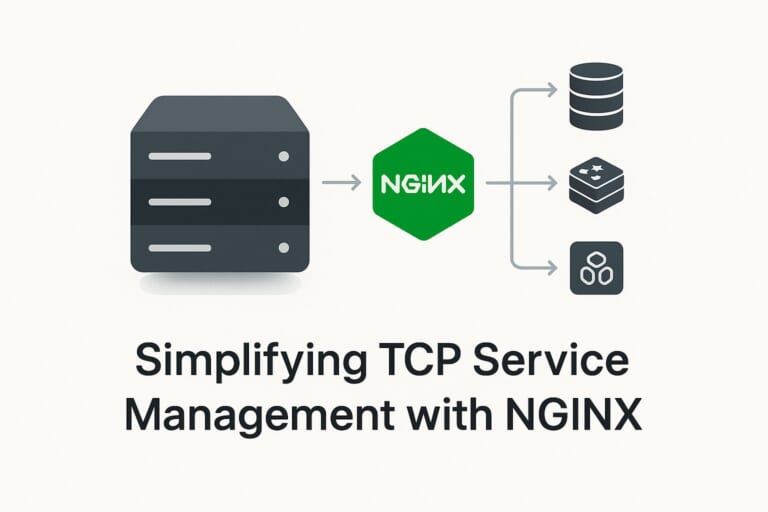
Learn how to dynamically manage NGINX stream (TCP/UDP) backends using the stream-upsync module with Consul or etcd service discovery. Add, remove, and update backend…
Learn how to monitor NGINX stream (TCP/UDP) traffic with the Stream Server Traffic Status module. Get real-time connection metrics, upstream health data, and Prometheus-compatible…
Learn how to use the NGINX stream lua module to add programmable logic to TCP and UDP traffic. This guide covers installation, configuration, cosockets,…
Learn how to send real-time NGINX metrics — request counts, response times, and custom counters — directly to StatsD, Graphite, and Datadog using the…
Learn how to use the NGINX SRT module to build a low-latency live streaming gateway. This guide covers SRT-to-TCP and TCP-to-SRT proxying, AES encryption,…
Learn how to configure NGINX Kerberos authentication with the SPNEGO module for transparent Single Sign-On in Active Directory environments. Complete guide covering installation, keytab…